Check any AI search claim against the actual research.
Paste something you read on LinkedIn. Get the evidence, the sources, and how much to trust it — free, no signup.
Example claim checks
Claim checked: “Demonstrate E-E-A-T signals”
High confidence (12.2/35) — Yes — E-E-A-T SEO improves Google AI Overview eligibility. Author bios and credentials are evaluated when Google determines content for AI Overview inclusion.
Claim checked: “Build knowledge graph presence”
High confidence (12.0/35) — Yes — knowledge graph and entity signals directly improve AI citation rates. Content referencing 15+ connected entities shows 4.8x higher AI Overview selection probability; brands with multi-platform entity presence are cited even on queries that do not name them. Authority is the filter AI applies before assessing content quality — which means off-page entity signals are a prerequisite, not a bonus.
Ranked by evidence, not by how often it's repeated.
The best-evidenced tactics in the database right now. Click any row to see the full source breakdown.
What moves the needle, per platform.
ChatGPT, Perplexity, and Google AI Overviews use different signals. Optimising for one does not help the others.
The same tactic doesn't apply the same way everywhere.
Each platform weighs different signals, so a tactic's evidence can be strong for one and untested for another. This shows which of the top-evidenced tactics actually apply per platform — not a fabricated score, just what the research covers.
| Tactic | ChatGPT | Perplexity | Google AI Overviews | Gemini |
|---|---|---|---|---|
| Display author bio and credentials | — | — | ✓ | — |
| Build evergreen comparison and category pages | ✓ | ✓ | ✓ | ✓ |
| Use server-side rendering for AI crawlers | ✓ | ✓ | — | ✓ |
| Optimise for Google AI Overviews | — | — | ✓ | — |
| Demonstrate E-E-A-T signals | — | — | ✓ | — |
| Use domain-specific technical language | ✓ | ✓ | ✓ | ✓ |
The studies behind the scores.
Every tactic is backed by reviewed sources. Click any to read the original.
Study: Query Fan-Out ChatGPT Brand
MJ Cachón· Sep 2026
6sense B2B Buyer Experience Report 2025
6sense· Sep 2026
MemToC: Evaluating Language Models' Ability to Retain Correct Information When Conflicting Tool Returns Are Provided
arXiv· Sep 2026
John Mueller on Bluesky: Programmatic SEO and Site Recovery
Google (via Bluesky)· Sep 2026
Visibility in ChatGPT and LLMs
Uberall· Sep 2026
YouTube AI Citation Study 2026
Otterly· Sep 2026
AI Search Trends
Ahrefs· Sep 2026
Search profile publishers updates
Google· Sep 2026
When the evidence surprises us.
Deep dives into findings that contradict the conventional wisdom.

ChatGPT cited 21% fewer domains after GPT-5.3. Breadth strategies stopped working.
Resoneo tracked 27,000 monitored ChatGPT responses across the GPT-5.3 transition in March 2026 and found average unique domains cited per response fell 21%, from 19 to 15. Citations concentrated into fewer sources rather than spreading further, which raises the bar for authority and definitive language instead of lowering it. Here is what changed, why an AirOps study of 353,799 pages explains part of the mechanism, and what to fix first.
Gemini does not check your domain authority. It checks whether you exist in the Knowledge Graph.
An Ahrefs analysis of 75,000 brands found Domain Rating correlates with AI citation rates at just 0.266-0.326 Spearman, the weakest signal tested, while branded web mentions hit 0.664-0.709 and YouTube channel mentions hit 0.737. That gap matters most for Gemini specifically, because its retrieval draws directly on Google's Knowledge Graph rather than a generic authority score. Here is why entity presence outweighs domain authority for Gemini, and what to build first.
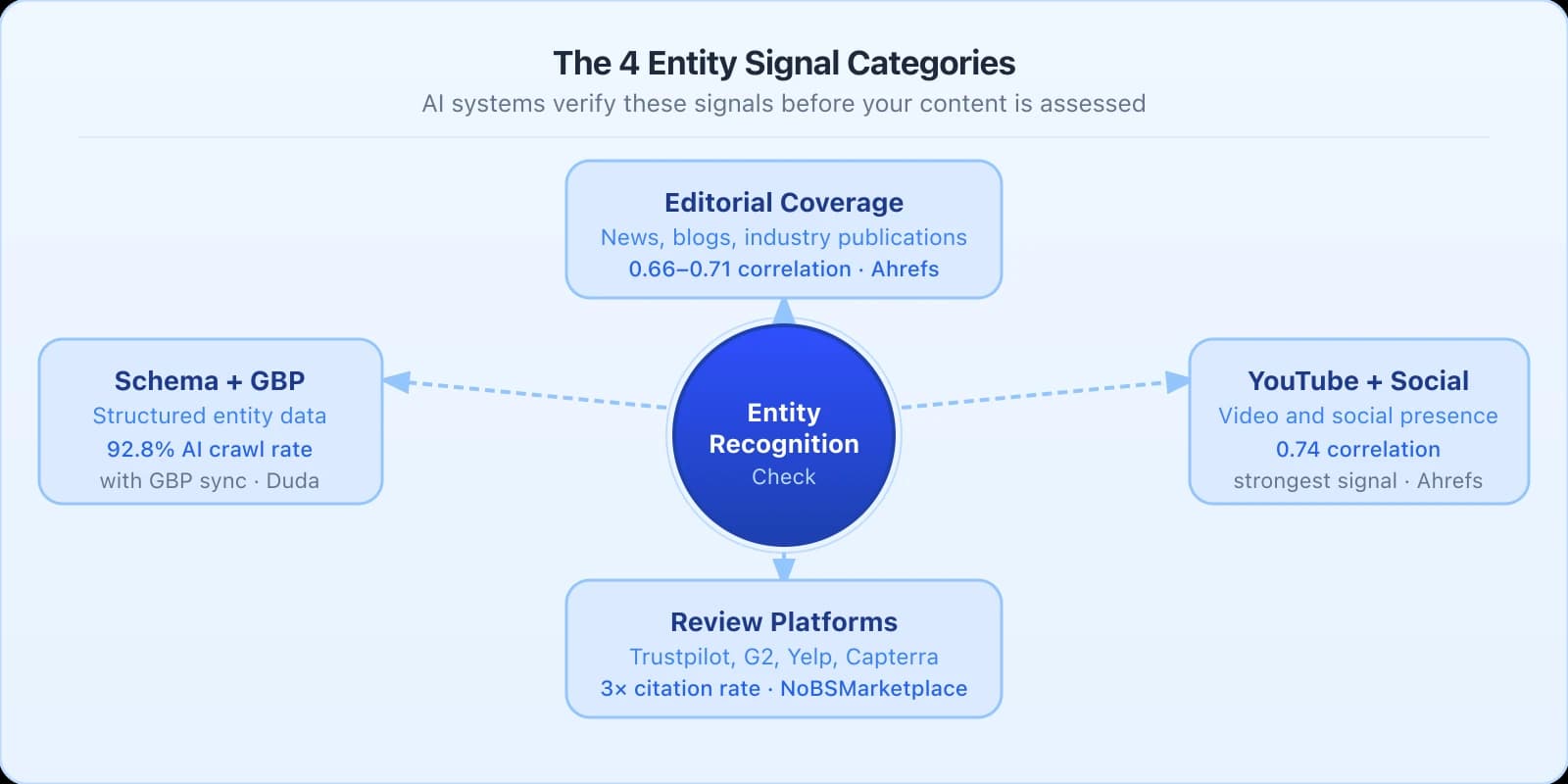
YouTube correlates with AI citations at 0.737. Backlinks do not come close.
An Ahrefs analysis of 75,000 brands found YouTube channel mentions correlate with AI citation rates at 0.737 Spearman, above branded web mentions (0.664-0.709) and far above Domain Rating (0.266-0.326). Separately, YouTube now accounts for 18.2% of non-ranking Google AI Overview citations, a share that grew 34% in six months. Here is why YouTube works through two distinct mechanisms, and what to actually publish.
Domain Rating is the weakest predictor of AI citations in a 75,000-brand study. Entity signals are 3x stronger.
An Ahrefs analysis of 75,000 brands found Domain Rating correlates with AI citation rates at just 0.266-0.326, the weakest signal measured. Branded web mentions hit 0.664-0.709. YouTube channel mentions hit 0.737. Here is what entity SEO for AI search actually means, and why most SEO teams are optimising the wrong metric.
Syndicated press releases earn 0.04-0.9% of AI citations. Original editorial coverage earns 57x more per piece.
A Digital Applied study found brands are 6.5x more likely to be cited in AI responses through third-party sources than through owned content, and 82% of AI citations come from earned media. Here is what digital PR for AI search actually requires, and why press release volume does not substitute for genuine editorial coverage.
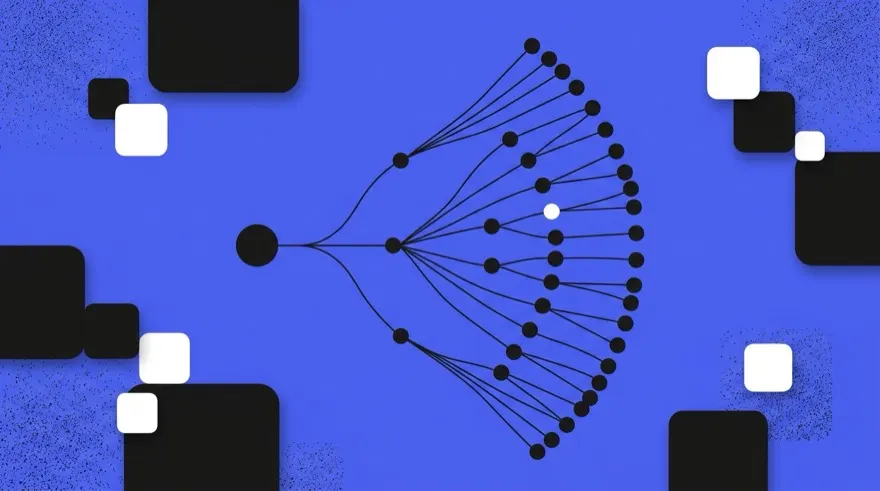
95% of the queries ChatGPT uses to find your content have zero search volume in any keyword tool.
ChatGPT expands a single prompt into 25+ sub-queries before retrieving content. An AirOps analysis of 548,534 pages found 32.9% of AI-cited pages were discoverable only through these fan-out sub-queries, invisible to traditional keyword research. Here is what fan-out query coverage means and why optimising for one primary keyword actively hurts adjacent AI citations.
An Ahrefs post and a Google engineering doc are not the same evidence.
So we don't count them the same. Every source is tiered before it moves a score, and studies lose weight as they age — a tactic backed only by old research falls on its own. How the scoring works →
⏱ Freshness decay: AI platforms change fast, so a tactic backed only by old studies scores lower automatically, regardless of tier.
Stop being the last to know what works.
We add new research as it publishes and update tactic scores when the evidence shifts — so you know what to act on before it becomes LinkedIn noise.