When the evidence surprises us, we write it up.
Deep dives into GEO and AEO findings that contradict the conventional wisdom — each one backed by the same scored sources as the tactics database.
ChatGPT cited 21% fewer domains after GPT-5.3. Breadth strategies stopped working.
Resoneo tracked 27,000 monitored ChatGPT responses across the GPT-5.3 transition in March 2026 and found average unique domains cited per response fell 21%, from 19 to 15. Citations concentrated into fewer sources rather than spreading further, which raises the bar for authority and definitive language instead of lowering it. Here is what changed, why an AirOps study of 353,799 pages explains part of the mechanism, and what to fix first.
Gemini does not check your domain authority. It checks whether you exist in the Knowledge Graph.
An Ahrefs analysis of 75,000 brands found Domain Rating correlates with AI citation rates at just 0.266-0.326 Spearman, the weakest signal tested, while branded web mentions hit 0.664-0.709 and YouTube channel mentions hit 0.737. That gap matters most for Gemini specifically, because its retrieval draws directly on Google's Knowledge Graph rather than a generic authority score. Here is why entity presence outweighs domain authority for Gemini, and what to build first.
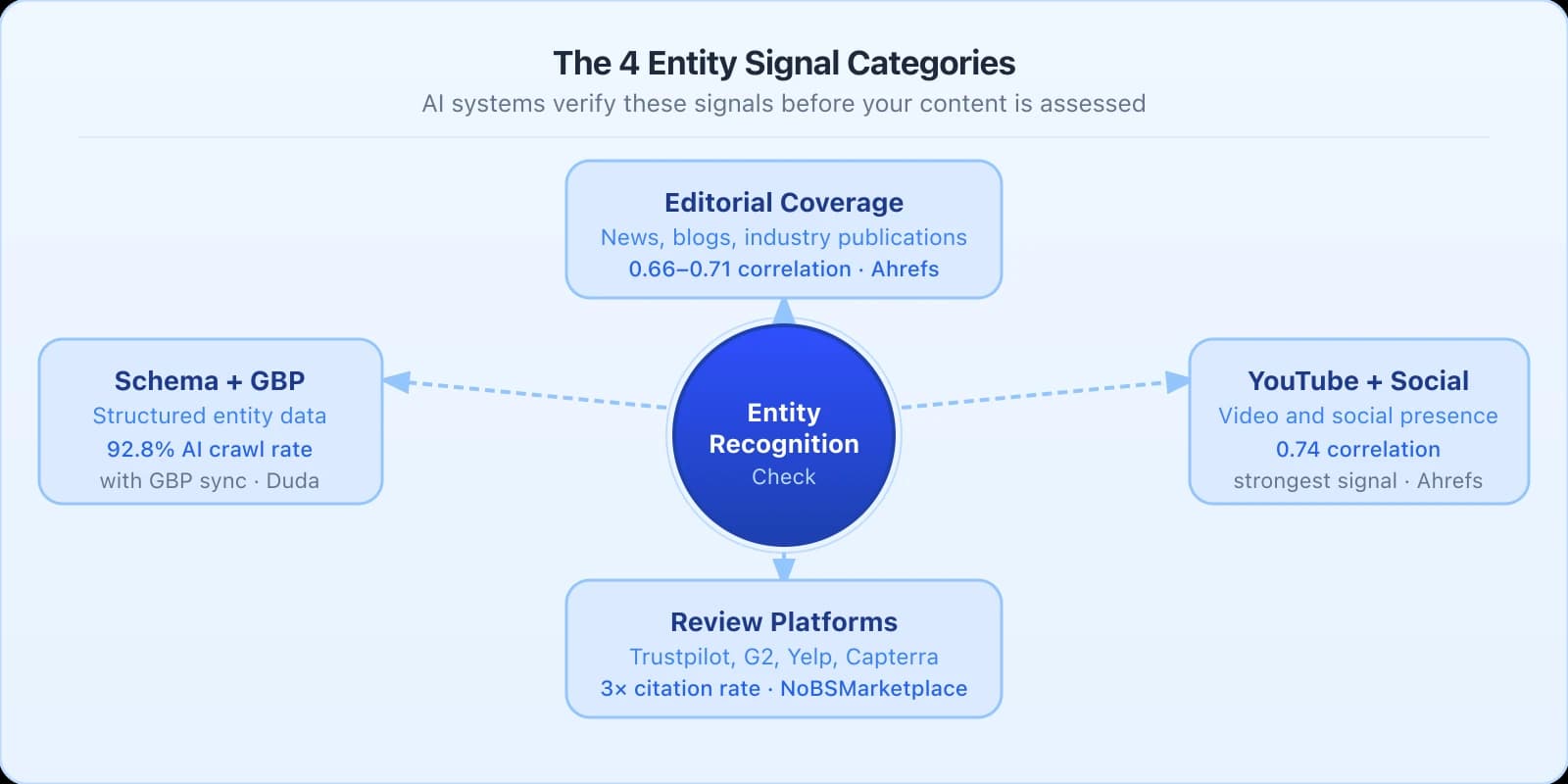
YouTube correlates with AI citations at 0.737. Backlinks do not come close.
An Ahrefs analysis of 75,000 brands found YouTube channel mentions correlate with AI citation rates at 0.737 Spearman, above branded web mentions (0.664-0.709) and far above Domain Rating (0.266-0.326). Separately, YouTube now accounts for 18.2% of non-ranking Google AI Overview citations, a share that grew 34% in six months. Here is why YouTube works through two distinct mechanisms, and what to actually publish.
Domain Rating is the weakest predictor of AI citations in a 75,000-brand study. Entity signals are 3x stronger.
An Ahrefs analysis of 75,000 brands found Domain Rating correlates with AI citation rates at just 0.266-0.326, the weakest signal measured. Branded web mentions hit 0.664-0.709. YouTube channel mentions hit 0.737. Here is what entity SEO for AI search actually means, and why most SEO teams are optimising the wrong metric.
Syndicated press releases earn 0.04-0.9% of AI citations. Original editorial coverage earns 57x more per piece.
A Digital Applied study found brands are 6.5x more likely to be cited in AI responses through third-party sources than through owned content, and 82% of AI citations come from earned media. Here is what digital PR for AI search actually requires, and why press release volume does not substitute for genuine editorial coverage.
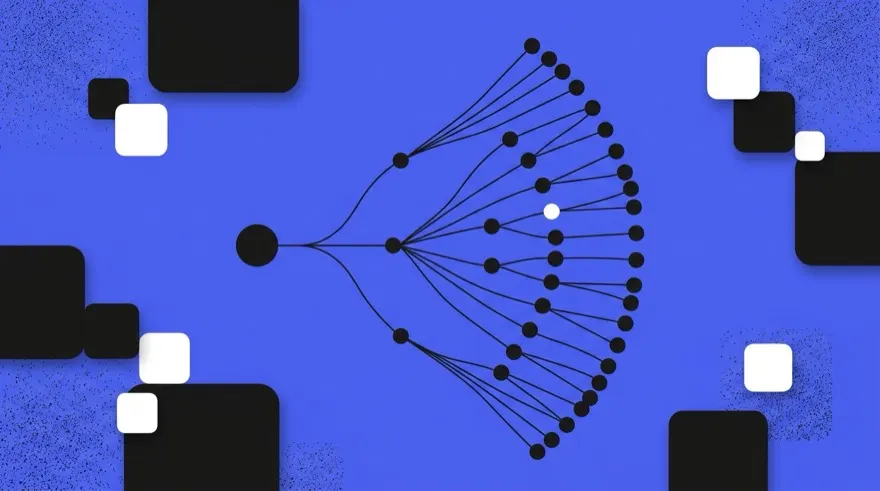
95% of the queries ChatGPT uses to find your content have zero search volume in any keyword tool.
ChatGPT expands a single prompt into 25+ sub-queries before retrieving content. An AirOps analysis of 548,534 pages found 32.9% of AI-cited pages were discoverable only through these fan-out sub-queries, invisible to traditional keyword research. Here is what fan-out query coverage means and why optimising for one primary keyword actively hurts adjacent AI citations.

97% of llms.txt files get zero AI crawler requests. Here is why the format does not work like robots.txt.
An Ahrefs analysis of 137,000 domains found only about 38,000 had a valid llms.txt file, and 97% of those received zero requests. An OtterlyAI 90-day experiment tracking 62,100+ AI bot visits found llms.txt pages performed 3x worse than average content pages. Here is what three independent studies actually show about llms.txt, and what to implement instead.
Generative engine optimisation (GEO): what it is, what the research shows, and how to do it
Generative engine optimisation is the practice of improving content so AI systems — ChatGPT, Perplexity, Google AI Overviews, and Gemini — select it as a citation source. Here is the evidence base: what GEO tactics are confirmed, which are overhyped, and how to prioritise.
ChatGPT SEO: how to get cited in ChatGPT answers — what the research actually shows
ChatGPT does not use backlinks or PageRank. It selects sources based on author authority, content structure, brand entity recognition, and retrieval relevance. Here is what controlled studies show about how to get your content cited in ChatGPT answers.
Keyword research tools for AEO: what works, what does not, and what the evidence says about how LLMs actually select answers
Traditional keyword tools measure Google search volume. AEO optimises for LLM answer selection. The two problems require fundamentally different inputs. Here is what the research shows about how to identify the queries where AI systems are choosing sources — and how to become one of them.
E-E-A-T for AI search: how Google's quality framework applies to ChatGPT, Perplexity, and LLM citations — and where it diverges
Google's E-E-A-T framework was built for human raters assessing traditional search results. AI systems weight its signals differently — and some signals that matter for Google barely register for ChatGPT or Perplexity. Research from Presence AI, AccuraCast, and Ahrefs shows where E-E-A-T applies to AI search and where the framework needs updating.
AI crawlability audit: what Writesonic found when they tested 62 webpage elements across 6 AI crawlers — and what it means for your site
JSON-LD scored zero out of six for readability across all major AI crawlers tested. The title tag was the only metadata element that 5 of 6 crawlers could read. A Writesonic study of 62 webpage elements reveals which technical signals AI systems actually ingest — and what a proper AI crawlability audit should check.
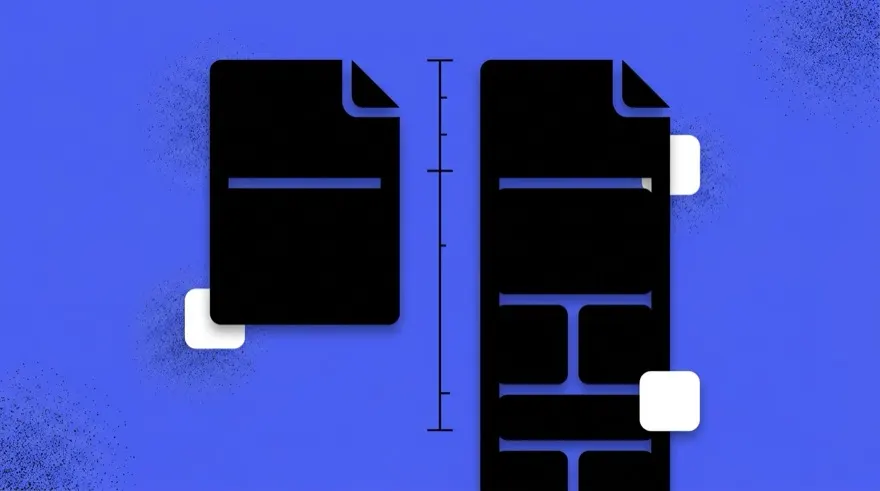
Two studies gave opposite answers on ideal content length for AI citations. Here is how to read both.
An AirOps analysis of 815,484 pages found the AI citation sweet spot is 500 to 2,000 words. A separate study of 30 million citations found 10,000-word pages get 62 times more citations. Both are correct. They are measuring different things.
GPT-4o and Google share only 4% of the same sources. Your SEO strategy is addressing a fraction of AI search.
A peer-reviewed arXiv study found that GPT-4o draws from a source pool that overlaps with Google by only 4%. Branded web mentions predict AI citations 3x more strongly than backlinks. Here is what the data says about how SEO and GEO differ and what actually drives AI visibility.
81% of AI-cited pages use schema markup. FAQ schema appears in 1.8% of them.
An analysis of 9,000 AI citation sources found that FAQ schema, the most recommended structured data type, appears in almost none of the pages ChatGPT, Perplexity, and Google AI Overviews actually cite. Person schema appears in 58.9%. Here is what the data shows.
All findings referenced in these posts are drawn from the BetterAISearch tactics database, which tracks and scores AI search research by evidence quality, methodology, and publication tier.